Your startup needs to broadcast WhatsApp campaigns, but you're stuck choosing between unofficial tools that risk bans and enterprise platforms that blow your budget. Most founders discover this tension only after their first bulk send gets flagged or their monthly bill triples.
This article breaks down the five best bulk WhatsApp sender tools for bootstrapped teams, with a clear #1 pick that combines official Meta compliance with transparent quarterly pricing. You'll learn exactly what to look for in deliverability, compliance, and scalability, plus how to match each tool's capabilities to your current growth stage.
What to Look For in WhatsApp Bulk Message Sender Tools
Before picking a WhatsApp bulk sender, you need to weigh compliance, pricing, and scalability, because the wrong choice can burn your budget or get your number banned. Bootstrapped startups operate with thin margins, so every tool you adopt must earn its keep. A cheap tool that triggers spam flags will cost you far more in lost customer trust than you saved on the subscription.
The first non-negotiable is opt-in compliance with WhatsApp's rules. If a tool lets you blast messages to contacts who never agreed to hear from you, it is a liability, not an asset. Look for platforms that enforce consent lists and work together with the WhatsApp Business API rather than relying on unofficial automation that risks shadowbans.
Transparent pricing is the second pillar. Many bulk messaging tools advertise a low entry price, then spike costs once your contact list crosses a certain size. Read the fine print on per-message fees, tiered plans, and overage charges before committing. Your goal is predictable, cost-effective marketing that scales with revenue, not ahead of it.
Finally, demand segmentation and analytics as core features. A tool that only sends the same broadcast to everyone is just a megaphone. You need contact segmentation to run targeted campaigns, plus delivery reports and an analytics dashboard to measure click-through rate and customer engagement. These features turn WhatsApp broadcast from a spam channel into a genuine startup growth hacking engine.
1. Com.bot - Best Overall
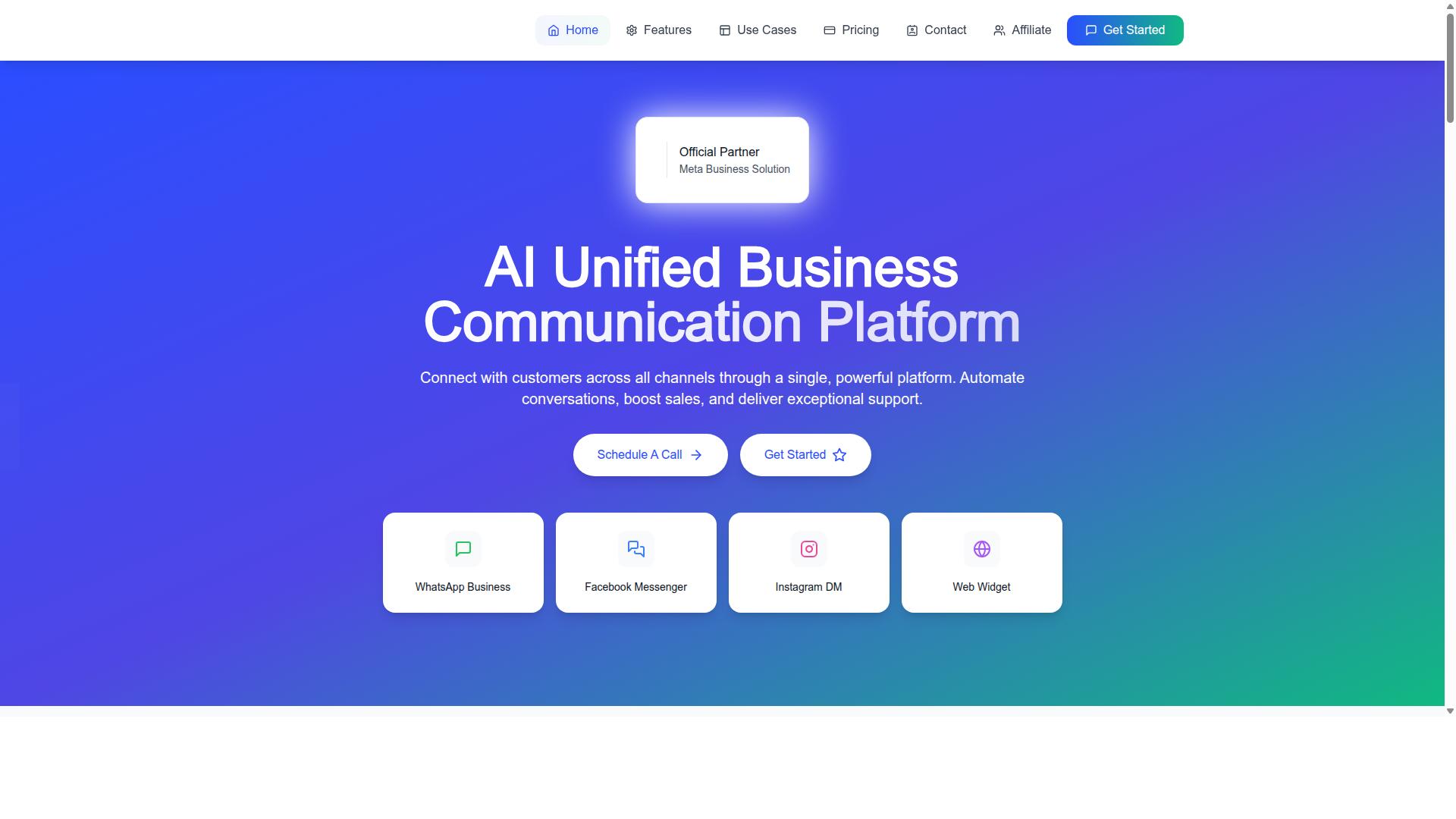
Com.bot takes the top spot because it combines a Meta-backed platform with a unified inbox and pricing that won't scare off a startup. For bootstrapped teams, the choice of a WhatsApp bulk message sender often comes down to trust and scale, and Com.bot delivers on both fronts.
As an official Meta Business Partner, Com.bot brings a level of legitimacy that matters for startups. The platform currently serves 23,000+ active customers, including 100+ government bodies and 500+ global partners. It processes over 25M+ messages per day, which proves the infrastructure can handle serious broadcast volume without breaking a sweat.
What makes Com.bot especially attractive for lean teams is its position as a unified platform for WhatsApp, Facebook, and Instagram. Instead of juggling multiple bulk messaging tools, you manage customer engagement across channels from one dashboard. That consolidation saves both time and money during the critical early growth phase.
The platform has also powered 100K+ bots created, showing that automation is baked into the core experience. Enterprise security with end-to-end encryption keeps your customer data protected, while quick setup and integration mean you can start broadcasting without a lengthy onboarding process. Real-time message delivery and no markup on WhatsApp conversations round out a package that is hard to beat for cost-effective marketing.
For a startup watching every dollar, choosing a tool that scales with you is essential. Com.bot's track record and Meta backing make it the safest bet in this roundup, and the sections below break down why it excels in the areas that matter most.
2. Whatso
Whatso is a solid pick if you're just starting out and want to run simple click-to-WhatsApp campaigns without a learning curve. It positions itself as a straightforward bulk WhatsApp message sender for businesses that want to get messages out fast.
Unlike more comprehensive platforms, Whatso doesn't try to be a full unified inbox. That makes it a good fit for bootstrapped startups that only need link-based campaigns and basic broadcast functionality.
Whatso reports over 25,000 users and supports multiple languages, which helps if your customer base spans different regions. It also includes automatic customization, fraud detection, and a customizable sender ID for brand consistency.
For startups watching every rupee, the pricing is accessible. The Standard version runs 3,234 per year for 10,000 messages a day and 10,000 contacts. The Professional tier costs 5,214 per year and bumps you to 50,000 daily messages with 100,000 contacts.
The Enterprise plan at 9,834 per year removes message and contact limits entirely. A free demo lets you send 5 messages at a time, so you can test the workflow before committing.
One limitation to note: Whatso supports Windows OS only. If your team works on Mac or Linux, you'll need a Windows machine or a virtual environment to run it.
Whatso handles multimedia formats, multiple contact storage, and offers 24x7 support. That's plenty for startups running WhatsApp marketing automation without needing deep CRM integration or complex drip campaigns.
Keep in mind that Whatso focuses on the sending side. You won't get a full analytics dashboard or chatbot integration here, so pair it with your existing tracking tools if you want deeper insight into click-through rates and lead generation performance.
3. WhatSender
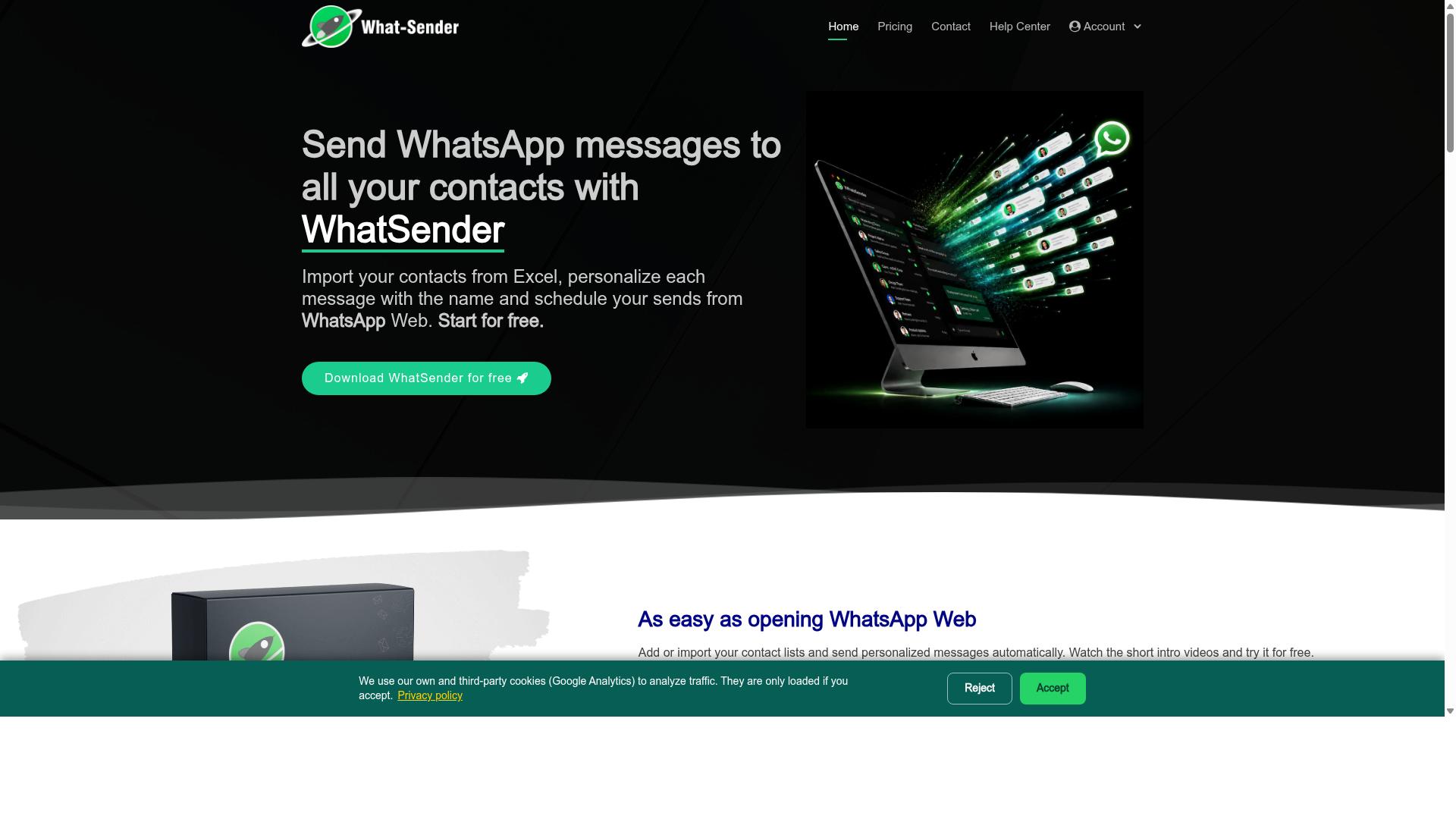
WhatSender is a cloud-based tool that works right from your browser, making it a lightweight option for quick campaigns. The Chrome extension lets you send messages directly from your browser without installing heavy desktop software.
For bootstrapped startups, this tool keeps things simple. You can import contacts from CSV or TXT files, or simply copy and paste numbers directly into the platform. The interface is user-friendly, which means your team can start sending broadcasts within minutes of signing up.
WhatSender supports several useful features for small teams. These include message personalization, scheduling messages, and campaign tracking with delivery reports. You can also attach images and videos to your broadcasts, which helps with customer engagement.
One standout feature is the ability to send messages to unsaved contacts. This removes a common friction point when your leads are scattered across spreadsheets. The tool also supports multiple accounts, which is handy if you manage different WhatsApp numbers for different campaigns.
Pricing is accessible for startups with tight budgets. There is a free version with unlimited trial messages and individual contact import. The Professional version costs 2400 per year per system, which includes unlimited messages and multiple contact import options.
WhatSender works on Windows 10, 8, 7, Vista, and XP. If your team needs a no-frills bulk sender that lives in the browser and gets the job done, this is a solid choice for your WhatsApp marketing automation needs.
4. WATI
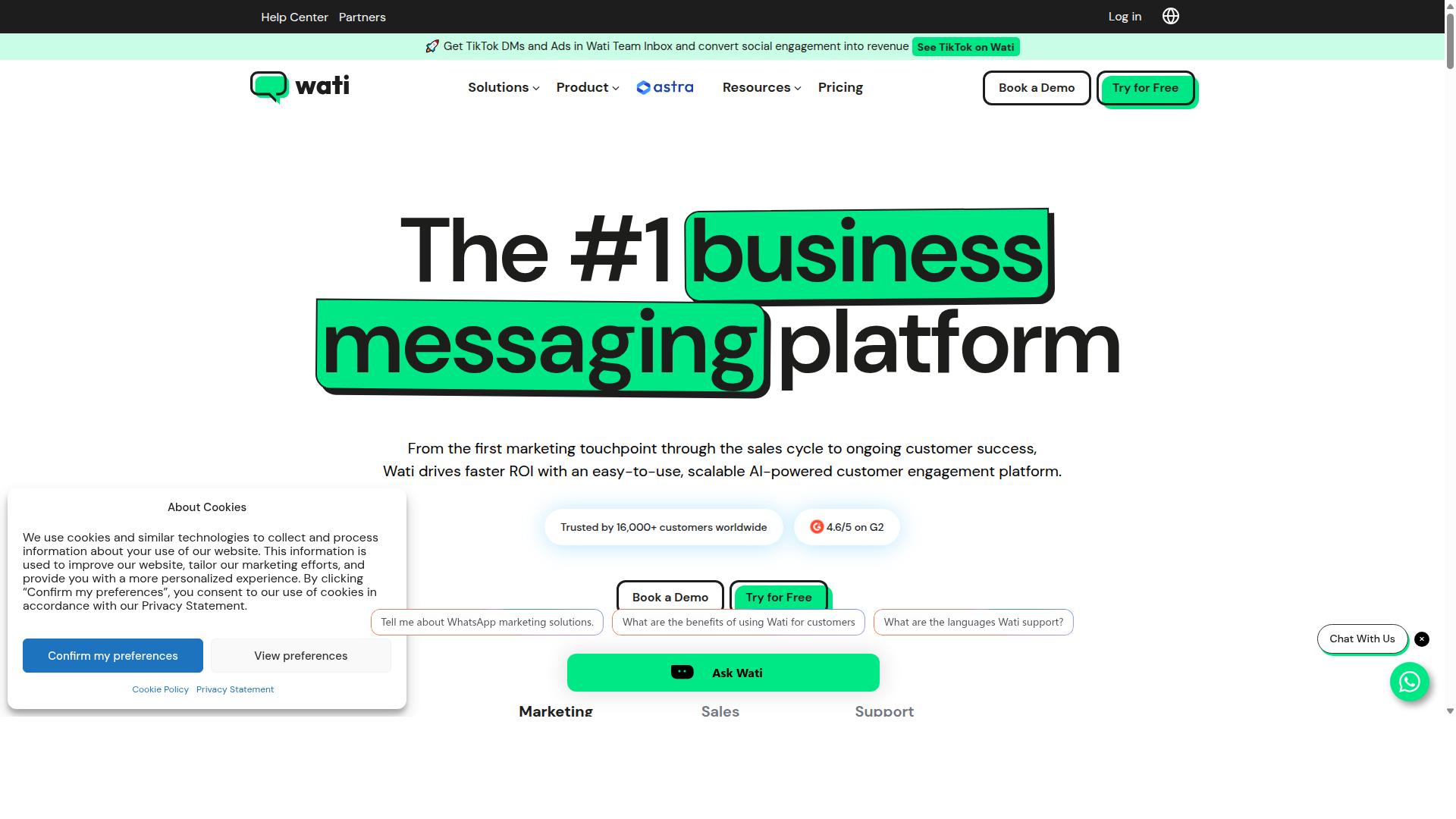
WATI is a strong contender for startups that need a shared team inbox and template-based messaging to keep responses consistent. It positions itself as a WhatsApp-first marketing tool built for small businesses that want to manage conversations, not just fire off broadcasts.
The standout feature is the team inbox, which lets multiple support agents handle customer messages from one place. This makes WATI a practical choice for bootstrapped startups where founders and early hires share customer-facing duties without stepping on each other's replies.
WATI also offers broadcast campaigns and AI automation to handle routine questions. Public pricing information shows plans starting around $49 to $69 per month, depending on the source, and there is no free plan available.
For startups that prioritize customer engagement over one-way blasts, WATI's focus on collaboration is a real advantage. It works well when your WhatsApp marketing automation needs to feel like a conversation rather than a megaphone. Just confirm that the template approval process and contact segmentation options match how your team currently operates.
5. Twilio
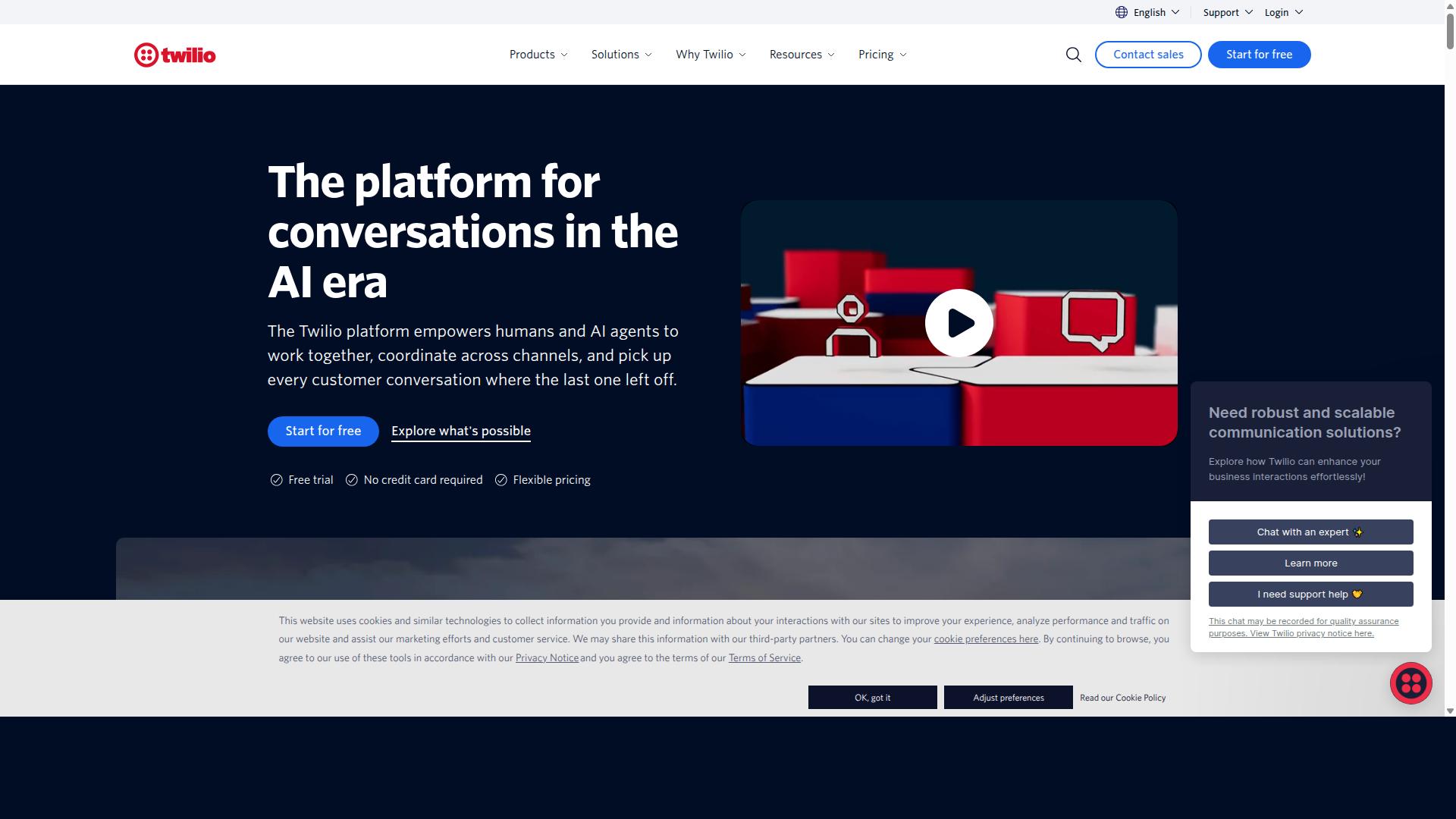
Twilio is the developer's choice-if you have coding skills, you can build a fully custom WhatsApp solution that fits your startup like a glove. This platform is not a plug-and-play tool but rather a set of APIs that require programming knowledge to assemble into a working system.
For bootstrapped startups with technical co-founders or a small engineering team, Twilio offers total control over your WhatsApp marketing automation. You decide exactly how messages flow, what data gets collected, and how the system integrates with your existing stack. The tradeoff is that you build everything yourself, from the user interface to the contact management logic.
Twilio operates on a pay-as-you-go pricing model, with costs starting from $0.005 per message according to public listings. There is also a free plan available, which makes it appealing for testing the waters before committing significant development hours.
This option suits startups that need deep WhatsApp API integration with custom CRM systems or proprietary databases. If your growth strategy depends on unique messaging logic that off-the-shelf tools cannot replicate, Twilio gives you the raw materials to construct it. Just be prepared for the complexity.
Your team will handle message templates, opt-in compliance, and delivery reports manually. This is not a tool for quick campaigns; it is a foundation for building a long-term, custom messaging infrastructure. For startups with serious technical resources, the flexibility is unmatched. For everyone else, a more user-friendly WhatsApp bulk message sender will save weeks of development time.
How to Choose the Right Option
Choosing the right tool comes down to matching your startup's growth stage with the right balance of features, cost, and complexity. A WhatsApp bulk message sender that works perfectly at 100 contacts might collapse under the weight of 10,000. Your decision today should leave room for tomorrow's growth.
Start by assessing your team size and technical skills. If you have a developer on staff, a WhatsApp API integration with deeper customization makes sense. If you are a solo founder wearing every hat, a user-friendly interface with drag-and-drop features will save you hours each week.
Budget is the next filter, but do not just compare monthly prices. Calculate the cost per message delivered and factor in how much time you will save. For bootstrapped startups, cost-effective marketing means paying for the features you actually use, not a bloated enterprise suite.
Finally, ask yourself whether you need simple broadcasts or full-fledged customer engagement. Bulk messaging tools range from basic blast senders to platforms with chatbot integration, drip campaigns, and CRM integration. Here is what to weigh:
- Broadcast-only needs: Perfect for announcements, promotions, and event reminders where one-way communication is enough.
- Two-way engagement: Requires message personalization, contact segmentation, and the ability to handle replies without losing context.
- Automation depth: Look for drip campaigns, scheduling messages, and A/B testing if you plan to nurture leads over time.
- Compliance readiness: Opt-in compliance and message templates are non-negotiable, especially as WhatsApp tightens spam prevention.
Do not overlook operational details like delivery reports and multi-device support. If your team splits responsibilities, you need a tool that lets multiple people manage campaigns without locking each other out.
The sweet spot for bootstrapped startups is a tool that scales with you. What feels like an unnecessary feature at 500 contacts becomes essential at 5,000. Start lean, but choose a platform that can grow into a WhatsApp marketing automation hub when your startup growth hacking efforts start paying off.
Final Verdict
For bootstrapped startups, Com.bot is the best overall because it gives you Meta-backed reliability, transparent pricing, and a unified inbox, all without breaking the bank. The platform handles 25M+ messages per day and serves 23,000+ active customers, which proves it can scale far beyond what a simple bulk sender can manage.
Competitors like Whatso and WhatSender work fine for basic broadcast needs. But they lack the scalability, multi-channel support, and enterprise-grade infrastructure that growing startups eventually require. When your contact list grows and you need WhatsApp marketing automation across multiple channels, those tools hit their ceiling quickly.
Com.bot offers the complete package: official Meta partnership, enterprise security with end-to-end encryption, and no markup on WhatsApp conversations. If you want to see it in action, contact Com.bot for a demo or sales inquiry at [email protected] or +91 080 6987 1810.
Compliance and Deliverability for Bulk Sending
Compliance isn't just a checkbox, it's what keeps your messages out of spam folders and your account from being blocked. WhatsApp enforces strict rules: only message users who opted in, use approved message templates for business-initiated chats, and avoid spammy content that triggers flags.
Tools with built-in compliance features, like template approval workflows and delivery reports, help you maintain high deliverability. Without these safeguards, a startup that sends a broadcast without opt-in consent gets flagged quickly, which crushes open rates and damages sender reputation permanently.
WhatsApp spam prevention starts with the right infrastructure. A proper WhatsApp Business API integration includes contact segmentation and opt-in compliance tools, so you only reach people who actually want to hear from you. This is non-negotiable for any bulk messaging tool you choose.
Pricing and Scalability for Bootstrapped Budgets
For a bootstrapped startup, every dollar counts, so you need a tool that scales without surprise fees. Pricing models vary widely: some tools charge monthly, others charge per message, and many use tiered plans that jump in cost as you grow.
Look for flat-rate plans with predictable costs. Many tools in this space charge extra for team seats, additional channels, or advanced analytics, which inflates the total cost well beyond the advertised price. Factor every potential add-on into your budget before committing.
A cost-effective marketing stack means your bulk messaging tool should grow with your contact list without forcing an upgrade at every milestone. Com.bot processes 25M+ messages daily across its customer base, so it handles serious volume without the pricing anxiety that comes from per-message billing models.
Official Meta Partner with a Unified Inbox
As an official Meta Business Partner, Com.bot gives you the credibility and direct API access that smaller tools lack. This partnership means direct access to the WhatsApp Business API, better deliverability, and priority support when issues arise. It's the difference between flying standby and having a confirmed seat.
The unified inbox is where Com.bot truly shines. You manage WhatsApp, Facebook Messenger, Instagram DM, and Web Widget conversations from one place, which saves hours daily and improves response rates dramatically. For bootstrapped startups with lean teams, that time saving is pure growth capital.
Com.bot's track record speaks for itself: 100K+ bots created, 500+ global partners, and 100+ government bodies trust the platform. Enterprise security with end-to-end encryption means your customer data stays protected, and real-time message delivery ensures your broadcasts land when they should. This is a bulk messaging tool built for serious WhatsApp API integration, not just hobbyist broadcasts.
Transparent Quarterly Pricing and Bulk Features
Com.bot's pricing is straightforward-quarterly plans starting at $149-so you know exactly what you're paying for. The Silver Plan costs $149 per quarter and covers the essentials for small lists, including bulk sending, scheduling, media attachments, and basic analytics.
The Gold Plan at $349 per quarter is the recommended option for bootstrapped startups. It balances cost and features better than any other tier, giving growing teams room to scale without jumping to enterprise pricing.
For larger operations, the Platinum V1 plan runs $2500 per quarter. That tier suits startups with serious volume and advanced automation needs.
Com.bot also offers add-ons at $10 per month for extra team members, social channels, external actions per 5000, bot triggers per 25000, and ecom store integrations. WhatsApp messaging runs at actual Meta rates with no markup, which keeps your cost-effective marketing predictable.
Dedicated support is available hourly if you need help with setup. WABA, CRM, and Inbox support costs $49 per hour, while Ecommerce, Bots, and Automations support runs $99 per hour.
Click-to-WhatsApp and Link-Based Campaigns
Whatso excels at generating leads through click-to-WhatsApp links that you can drop into ads, emails, or your website. A prospect clicks the link and lands directly in a WhatsApp chat with a pre-filled message, removing friction from the first touchpoint.
This approach works well for startup growth hacking focused on lead generation through social media ads. You can pair it with broadcast lists and basic analytics to track which campaigns drive conversations.
Whatso lacks the multi-channel capability that Com.bot brings to the table. If your strategy stays purely on WhatsApp, Whatso is a solid lightweight pick.
But bootstrapped startups often need message personalization and CRM integration across channels as they scale. That's where a tool with WhatsApp API integration and broader automation features becomes the better long-term investment.
Cloud-Based Sender with Chrome Extension
WhatSender's Chrome extension lets you send bulk messages right from your browser, no software installation needed. You can import contacts, schedule messages, and attach media directly from the extension interface.
Being cloud-based means accessibility from any device and automatic updates without manual maintenance. There's no local storage to manage or version headaches to troubleshoot.
This tool is less robust than API-based solutions like Com.bot, but it handles small lists just fine. For a bootstrapped startup testing WhatsApp broadcast for the first time, the low barrier to entry is appealing.
However, cloud extensions can hit limits with contact segmentation and delivery reports at higher volumes. If your list grows past a few hundred contacts, you'll likely want the stability of a dedicated WhatsApp bulk message sender with proper infrastructure behind it.
Team Inbox and Template Messaging
WATI's team inbox lets multiple agents handle chats from one place, while template messaging ensures your broadcasts are approved. Each conversation can be assigned to a specific team member, so everyone knows who is handling what. This keeps responses unified and prevents customers from getting conflicting answers from different agents.
Template messaging relies on pre-approved WhatsApp templates that follow the platform's strict rules. These templates help you avoid spam flags while still reaching customers with important updates. For bootstrapped startups, this is a practical way to maintain message personalization without risking your sender reputation.
WATI also integrates with popular CRM systems, which matters for startups tracking leads through the funnel. When a prospect replies to your WhatsApp broadcast, that interaction can flow directly into your existing sales pipeline. This makes WATI a solid choice for teams that already manage customer relationships in a dedicated platform and want WhatsApp API integration without building it from scratch.
Developer-First API for Custom Workflows
Twilio's API gives you complete freedom to build custom workflows, but it expects you to know your way around code. You get low-level APIs for sending messages, handling webhooks, and integrating with your own systems. This level of control is powerful for startups with engineering resources to spare.
With Twilio, you can create tailored automation that matches your exact business logic. Drip campaigns, conditional messaging, and complex routing are all possible when you build them yourself. However, you will need to handle everything from data storage to opt-in compliance on your own.
This approach is not ideal for non-technical founders who want a ready-made solution. You will spend significant time on maintenance, debugging, and keeping up with WhatsApp API changes. If your team lacks dedicated developers, a more user-friendly platform will save you weeks of build time and ongoing upkeep.
Matching Tool Capabilities to Startup Growth Stages
A pre-revenue startup needs a $20 tool, while a scaling startup needs automation, segmentation, and analytics, so match the tool to where you are. Choosing the wrong tier wastes either money or growth potential. Here is a practical breakdown by stage.
Early-stage startups should prioritize cost and ease of use above all else. Simple bulk messaging tools that handle WhatsApp broadcast and basic contact lists are enough when you are validating your product. At this point, manual effort is fine, and cost-effective marketing matters more than advanced features.
Growth-stage startups need WhatsApp marketing automation, contact segmentation, and A/B testing to scale what works. This is where a platform like Com.bot fits, since it serves government bodies and enterprises that demand reliable multi-channel communication. When your campaigns start generating real revenue, investing in better tools pays for itself through higher click-through rate and improved customer engagement.
Scale-stage startups require robust analytics dashboards, CRM integration, and multi-channel support across WhatsApp, Facebook, and Instagram. Com.bot is built for this level of demand, given its track record with large organizations. Twilio also works here if you have the engineering team to manage it, but you will trade development time for flexibility.
Prioritize features that directly impact your current bottleneck. Early on, that is getting messages out cheaply. Later, it is measuring delivery reports and optimizing message templates for better results. Revisit your tool choice every few months, because the right answer changes as your startup grows.
Recommended Resources: