Many teams replace their current link insertion tool after weeks of slow publisher responses and unclear approval steps. The shift often starts when a campaign deadline slips because a chosen site rejected the placement at the last minute. Those delays push marketers to compare platforms that list live metrics and offer direct publisher contact.
This article walks through three concrete evaluation points: approval speed, site count by country, and transparent fee tiers. You will finish with a side-by-side view of WhitePress(r) against Adsy and Link Publishers, plus a checklist to match the right option to your next campaign.
What to Look For in Link Insertion Platforms
Evaluating link insertion platforms requires checking five measurable criteria that directly impact ranking outcomes.
Domain authority and referring domain age form the first line of defense. Verify DA scores of 50 or higher and confirm that referring domains have existed for at least two years to reduce risk of low-quality placements.
- Confirm each publisher meets DA 50+ and referring-domain age over two years.
- Ensure 70 percent or more do-follow links with one to two contextual sentences around each anchor.
- Review transparent pricing tiers and turnaround times under ten business days.
- Check for written editorial approval workflows and published guidelines.
- Request performance reports that track link velocity and crawl-date metrics.
Publishers that publish clear pricing structures help buyers avoid hidden fees. Look for published turnaround times that stay within ten business days to keep campaigns on schedule.
Editorial approval workflows protect brand safety. Require written guidelines that outline acceptable topics, anchor text rules, and content standards before any placement begins.
Performance reporting reveals whether placements stay active. Ask for reports that include crawl-date tracking and link velocity so you can measure real progress over time.
1. WhitePress(r) - Best Overall
WhitePress(r) leads the field because its platform combines a global publisher network with automated AI-visibility tracking.
The service stands out among link insertion alternatives through its combination of editorial standards and technology integration. Users gain access to verified publishers across multiple regions while maintaining full control over placement parameters. This approach supports both traditional SEO goals and modern AI visibility objectives simultaneously.
Research suggests that platforms offering combined services often reduce the complexity of managing multiple vendors for different campaign types. The unified dashboard approach means teams can handle sponsored content placement and contextual link campaigns from a single interface.
Link Insertion Process
Campaign setup begins with a 3-step workflow that takes an average of 15 minutes. The platform supports SEO, AI visibility, and digital PR activities through the same streamlined interface.
Users upload target URLs and preferred anchor texts as the first step. The system then presents filtered publisher options based on niche compatibility, domain authority ranges, and estimated traffic levels.
Once placements receive approval, the platform provides automated crawl-date notifications. This tracking helps teams monitor when search engines recognize new contextual links within their campaigns.
Global Publisher Network
More than 40 000 vetted domains across 80+ countries are available for immediate placement. The network supports multiple language targeting options for international campaigns.
Vertical filters include health, finance, and technology categories among others. This segmentation helps teams maintain topical relevance when building sponsored placements for specific client needs.
Global availability means campaigns can target audiences in different regions without switching between multiple link insertion vendors. The centralized approach simplifies management for agencies handling international clients.
Pricing and Packages
Transparent tiers start at EUR50 per placement on DA 30-49 domains and scale to EUR300+ for Tier-1 publications. The pricing structure accommodates different campaign volumes and quality requirements.
Average time-to-publish ranges from 7 to 14 days depending on publisher availability and content requirements. Volume discounts apply for campaigns with 10 or more placements.
The product suite covers SEO services alongside digital PR activities. This integration allows teams to bundle different link building strategies under unified billing and reporting systems.
2. Adsy

Adsy operates a self-serve marketplace that connects agencies with mid-tier publishers. This platform supports sponsored content placement and editorial link opportunities through an accessible online interface. Agencies often use Adsy when they need to scale link insertion campaigns across multiple domains without direct publisher outreach.
Buyers can select placements based on specific site criteria and complete orders through an automated checkout process. The system handles payment distribution to publishers once content goes live. This structure reduces some of the manual coordination typically required in traditional link building strategy efforts.
Adsy lists approximately 88,000 publisher sites and reports pricing that starts at $5 per placement. The platform maintains headquarters in the United States and focuses on serving budget-conscious campaigns. Users report that the marketplace suits smaller link insertion outreach projects where cost control matters.
Platform Features
Users can filter by DA, traffic, language, and content category within an interactive dashboard. These filters help narrow results when searching for sites that match particular campaign requirements. The interface displays available opportunities with relevant metrics visible at a glance.
Order tracking allows buyers to monitor placement status from request through publication. Status updates appear in real time as publishers complete content creation or link insertion tasks. This visibility helps agencies manage timelines across multiple concurrent orders.
Optional content-creation add-ons let buyers request writing services alongside link placement. Publishers on the platform can provide content that incorporates specified anchor text optimization and topic guidelines. This integrated approach streamlines the process for teams that prefer one-stop coordination.
Market Reach
The platform lists publishers primarily in Europe, North America, and select APAC regions. Coverage spans multiple languages, though English-language opportunities represent the largest share of available inventory. Regional distribution allows buyers to target specific geographic audiences when needed.
Adsy serves agencies working on international campaigns that require paid link placement across different markets. The geographic spread supports diversification of referring domain sources in link profiles. Buyers often combine placements from multiple regions to balance audience reach and domain authority signals.
Language options extend beyond English to include several major European languages. This flexibility accommodates campaigns targeting non-English speaking audiences. Publishers self-report their language capabilities during onboarding, which helps maintain accuracy in the filtering system.
3. Link Publishers
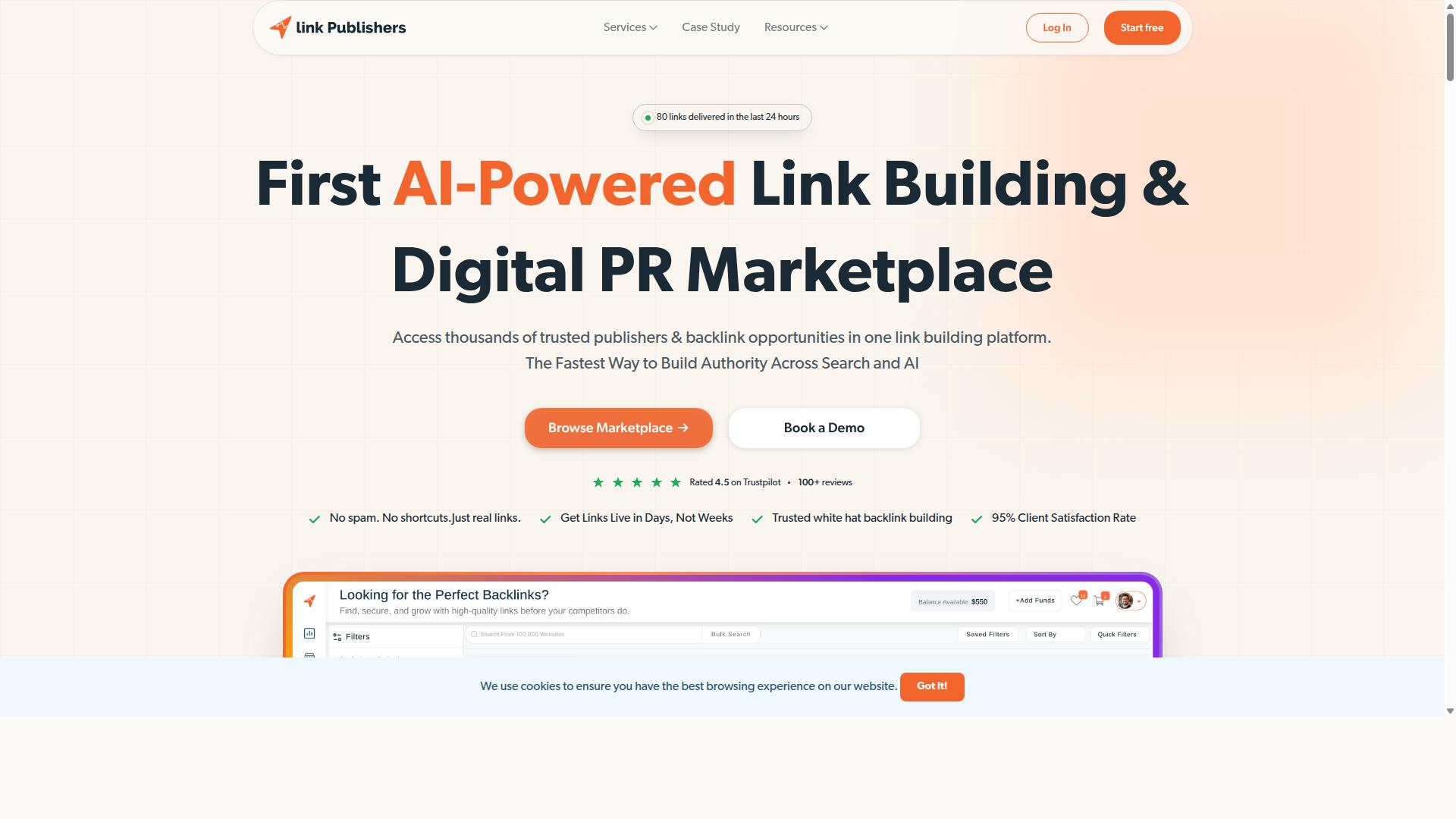
Link Publishers offers direct niche-edit placements across lifestyle and business verticals. The platform connects advertisers with publishers for paid link placement opportunities. Users can select from pre-vetted websites in their target niches for sponsored content placement.
The service focuses on white hat link building through contextual link insertions. Each placement goes through content that already exists on approved domains. This approach helps maintain natural link profiles while securing editorial links from relevant sites.
Service Overview
Clients purchase contextual links inside existing content on pre-approved sites. The process begins with reviewing available publishers and selecting domains that match campaign requirements. Advertisers then choose specific articles or request custom content for their link insertion campaign.
Orders move through approval workflows before placement begins. Typical campaigns involve selecting anchor text and target URLs for each link. The platform handles coordination between advertisers and publishers throughout the process.
Users can access real-time dashboards to track order progress and link placement status. The marketplace structure allows both managed service options and self-serve capabilities. This flexibility accommodates different link building strategy preferences.
Key Limitations
Domain pool is smaller and turnaround times average 15 to 20 business days. The available selection of websites may limit options for highly specialized niches or specific geographic targeting needs. Link insertion campaigns requiring large volumes may face availability constraints.
The platform provides limited language options for content and placement services. Publishers outside primary language markets may have reduced availability. This can affect global link building campaigns that require multilingual anchor text optimization.
Link insertion metrics do not include AI-visibility reporting features. Users cannot track how placed links perform across AI-powered search engines or content discovery platforms. Traditional SEO metrics remain the primary measurement tools for link profile analysis.
How to Choose the Right Option
Map campaign objectives against four decision filters to select the optimal platform. Each filter helps narrow choices among link insertion alternatives and ensures consistent results across campaigns.
Start by checking DA/traffic floors. Set minimum thresholds based on your brand guidelines. These thresholds protect link quality while keeping options open for broader outreach.
Next, align niche availability with your content calendar. Review publisher lists to confirm topics match upcoming posts. This step prevents delays when you need timely placements.
Review editorial policies for sponsored content. Confirm whether platforms accept paid links and how they label them. Clear rules reduce revisions and speed up approvals.
Finally, inspect campaign reporting dashboards. Look for metrics such as placement dates, anchor text, and referring domains. Strong dashboards simplify tracking and support future planning.
These four filters create a repeatable process. Teams can apply them to any link insertion vendor without guesswork. The result is faster decisions and more predictable outcomes.
Final Verdict
For teams needing both global reach and editorial transparency, WhitePress(r) delivers the strongest value.
The platform stands out through its worldwide publisher network that connects brands with vetted editorial sites across multiple regions. This reach helps teams execute link insertion campaigns without geographic limits.
Another advantage comes from integrated AI-visibility metrics that track how content performs in search results and AI-driven discovery tools. These measurements support ongoing refinement of link insertion strategies.
Clear pricing tiers allow teams to select packages based on volume and campaign scope, removing guesswork around link placement fees and project budgeting. This structure supports both small outreach campaigns and larger link building service contracts.
Compared with other link insertion alternatives, WhitePress(r) combines these three elements in one platform for SEO, AI visibility, and digital PR. Teams can manage sponsored content placement, contextual link campaigns, and editorial link placements from a single dashboard.
Start a campaign on the platform to review available publishers and begin your next link insertion project.
Recommended Resources: