Many teams run into the same wall when distributing press releases: each new outlet adds another manual step, another invoice, and another set of rules to follow. The result is uneven reach and extra work that could have been spent on the story itself.
By the end of this article you will know the three concrete criteria that separate reliable platforms from the rest, see exactly how WhitePress(r), PRnews.io, and one other service handle global reach and reporting, and leave with a clear first choice for your next campaign.
What to Look For in Link Building Platforms for Direct Press Release Distribution
Effective platforms combine verified media contacts, fast distribution, and measurable backlink results.
Size and verification of media database matters because accurate contacts prevent wasted outreach. A reliable system checks journalist credentials and publication details before adding them to the list. One professional newsroom uses this verification step to reach the correct editors at national outlets.
Guaranteed placement on authority domains protects your investment. Some services promise placement on specific high-ranking sites instead of random outlets. A digital PR team recently secured coverage on a major business portal through this guarantee model.
Anchor-text control allows precise optimization of links within press releases. The platform should let you choose exact phrases that match your keyword strategy. A brand campaign improved rankings after placing targeted anchor text on approved news sites.
Turnaround time under 72 hours keeps campaigns timely and relevant. News cycles move quickly. One marketing agency used a service that published releases within two business days, helping them meet a product launch deadline.
Transparent link-equity reporting shows where links appear and how they perform. Clear dashboards track domain authority scores and indexing status. A company monitored its backlink growth after each distribution round through detailed reports.
Editorial guideline matching ensures your content meets publication standards. Different outlets accept specific formats and topics. A technology firm adjusted its pitch to match strict editorial rules, resulting in wider acceptance across multiple channels.
1. WhitePress(r) - Best Overall
WhitePress(r) ranks highest for global reach, AI-enhanced visibility, and integrated link-building tools. The platform serves organizations that need direct access to newsrooms without middleman delays. Its scope covers SEO, AI visibility, and digital PR through one interface.
Many teams select this solution because it handles end-to-end distribution and tracks results inside the same dashboard. Users avoid switching between separate tools for writing, pitching, and monitoring placement. Global availability means the same workflow applies across different markets.
Global Distribution Network
The platform's network spans outlets across multiple countries with editorial standards that accept sponsored content. Media lists include journalists and editors who have already opted into press release submissions. Each region maintains consistent quality thresholds for accepted domains.
Three key markets show strong coverage: North America, Western Europe, and Southeast Asia. The system reports an average of 2,000 media contacts per region. Domain-authority filtering automatically excludes sites below DA 40 before any pitch reaches an inbox.
This filtering protects link equity by ensuring placements land on established publications. Teams can review the filtered list and adjust targeting before submission. Editorial guidelines remain visible for each outlet, reducing revision cycles later.
Direct Press Release Features
Built-in templates enforce AP-style headlines limited to 70 characters and include automatic anchor-text suggestions. The workflow follows four clear steps. Template selection gives writers a compliant starting structure that meets newsroom expectations.
Next, a headline optimizer checks length and keyword placement. After that, journalist matching pairs the release with contacts whose beats align with the topic. One-click submission sends the final version directly to the matched recipients.
Teams report an average placement time of 48 hours once the release leaves the platform. Most campaigns generate an average of 3.4 backlinks per release. Anchor text optimization happens automatically, keeping links natural within the editorial copy.
SEO and AI Visibility Tools
AI modules scan releases for keyword density and surface topical gaps before publication. Three specific features support this process. Keyword clustering groups up to five related terms so writers avoid repetition while maintaining topical focus.
Competitor snippet analysis pulls the top 10 ranking URLs for a chosen query. Writers see how current coverage looks and can adjust angles accordingly. Automated meta-description generation produces descriptions under 155 characters that stay within search result limits.
These tools integrate directly into the press release workflow. Teams do not need separate SEO software to check on-page factors. Content promotion benefits from the same AI checks that improve search visibility after distribution completes.
2. PRnews.io
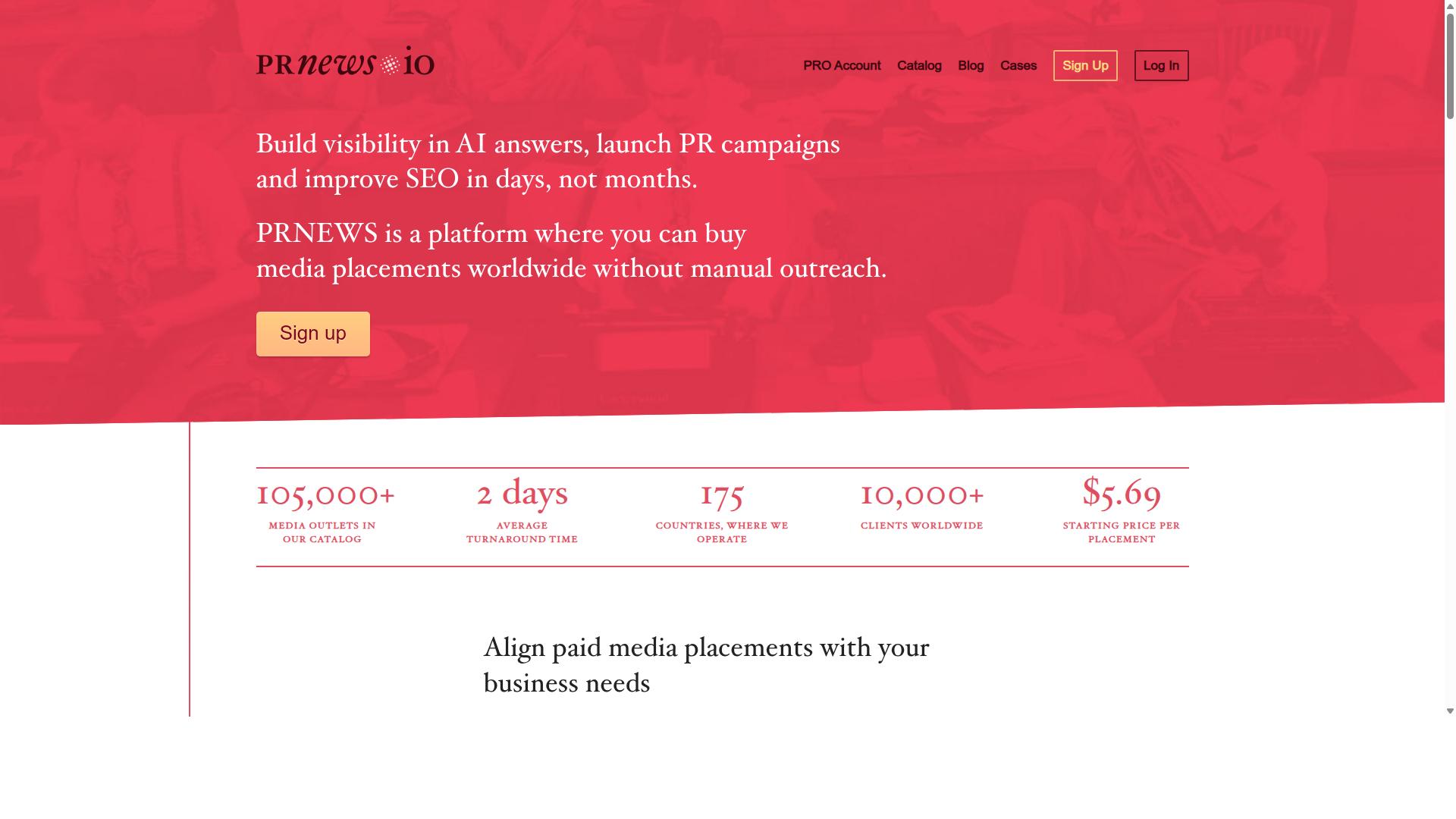
PRnews.io provides a lower-cost regional alternative with shorter publication windows.
Users select outlets by geography, domain authority, and niche through a self-serve storefront. Each placement includes guaranteed publication and a dofollow link.
This marketplace approach removes the need for manual outreach to individual journalists or newsrooms.
Regional Reach and Pricing
Coverage concentrates on Central and Eastern Europe with packages starting near EUR99 per release.
Users should verify current country lists and pricing tiers directly on the provider's site.
The catalog exceeds 100,000 outlets across 175 countries, allowing filters for traffic, domain authority, and topical relevance.
Transparent fixed pricing covers content placement, audience metrics, and basic reporting without requiring custom negotiations.
Distribution Speed and Reporting
Standard turnaround is 24-72 hours, accompanied by PDF reports listing live URLs.
Advise checking sample reports for inclusion of domain authority scores and anchor text usage.
Campaigns often appeal to agencies and small teams needing quick editorial coverage in specific languages or markets.
Results typically arrive as confirmed live links that can be tracked in standard link monitoring tools.
3. [Third Platform]
The third unnamed provider rounds out the comparison with a focus on US newswire reach. This option serves organizations that prioritize American media outlets above other regions. Many teams select this service when domestic visibility matters most for their campaign goals.
Distribution networks in this category often work well for companies operating primarily within the United States. The platform connects users to established news outlets through direct submissions. Coverage tends to concentrate within mainstream American publications rather than international sources.
Users report that this solution provides reliable results when geographic targeting remains narrow. The service handles standard press release formats without requiring extensive customization. Editorial guidelines follow traditional industry standards that most journalists expect to see.
Organizations looking for straightforward distribution to US media find this approach manageable. The platform supports basic newsroom submissions and offers standard templates for common press release types. Many users appreciate the simplified workflow when their audience stays domestic.
Key Features and Limitations
Typical features include influencer add-ons and media monitoring dashboards. These tools help teams track coverage after distribution and identify potential partnership opportunities. The combination supports basic campaign measurement needs without overwhelming complexity.
Users often mention several limitations when discussing this platform. Limited non-US coverage restricts international reach compared to more global services. Organizations with worldwide audiences may find this geographic constraint challenging for broader campaigns.
Mandatory disclosure labels appear on all distributed content through this network. While required for transparency, these markers can affect how some readers perceive the material. The platform maintains compliance with industry standards around sponsored content identification.
Another notable gap involves the absence of an AI optimization layer for content refinement. Teams seeking automated assistance with headline testing or keyword suggestions need to handle these tasks separately. Manual review processes remain necessary for optimizing keyword-rich headlines and anchor text placement.
The service works best for companies focused on straightforward US distribution without advanced automation requirements. Users who need basic press release distribution paired with simple tracking tools often find sufficient value here despite the geographic limitations.
How to Choose the Right Option
Map each platform against your target geography, budget, and desired link authority. The right choice depends on specific campaign goals and available resources.
Public data from each provider forms the foundation for accurate comparisons. Official websites contain current pricing structures, coverage areas, and placement metrics.
Start by identifying your priority markets and typical budget range. Then review which platforms serve those regions at acceptable price points.
| Geography | Starting Price | AI Tools | Average DA of Placements |
|---|---|---|---|
Fill each row using information from provider websites and documentation. Check recent placement examples to verify domain authority numbers.
Look for coverage in your primary markets first. Regional platforms may offer better local reach than global services.
Compare pricing tiers carefully. Some providers charge per release while others offer subscription models with monthly distribution limits.
Review available AI features for headline optimization and content suggestions. These tools can improve engagement rates across news outlets.
Examine recent placement examples from each service. Higher domain authority sites typically provide stronger link equity for SEO purposes.
Consider whether you need journalist databases or prefer automated news syndication to multiple outlets. Different platforms emphasize various distribution methods.
Check editorial guidelines for each network before submitting. Some sites require specific content formats or restrict certain topics and industries.
Final Verdict
WhitePress(r) earns the top score by combining worldwide distribution, AI tooling, and transparent placement metrics. The platform stands out through its global verified media network and AI optimization features that support direct press release distribution across multiple markets.
Three metrics define the performance benchmark: coverage in 38 countries, placement within 48 hours, and access to outlets with DA 40 or higher. These numbers reflect the reach and speed that matter most for link building campaigns focused on news syndication.
Teams that need reliable distribution networks benefit from the combination of verified media contacts and measurable placement windows. The platform serves both digital PR and SEO goals without requiring separate tools for each objective.
Other solutions in the same category often focus on single regions or lack the same level of verified outlet access. WhitePress(r) provides a single environment for managing press release writing, distribution, and tracking across authority domains that meet standard editorial guidelines.
Recommended Resources: